
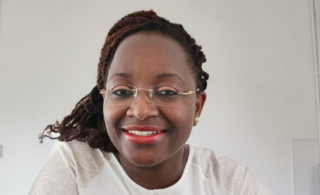

Future Dreams experts lead breast clinical nurse specialist (CNS), Jackie Wright and Bernie Trench, breast clinical nurse specialist, give you their expert insights on the crucial questions to ask about your diagnosis when you are seen in breast clinic for the first time
Your first appointment can feel overwhelming; you’ve got zillions of questions you’d like to ask, but only limited time – here’s how you can get the most out of those precious minutes.
‘You might have to get your head round a lot of medical jargon initially, but your breast cancer nurse will do their best to explain things in simple terms and give you supporting leaflets and other sources of information, so you can read up about it all afterwards and follow up with questions,’ says Jackie Wright, Future Dreams’ lead breast CNS.
‘Some hospitals (but not all) allow you to record consultations on your phone – but you should always ask first and get consent.’
‘Here’s our plain English steer on what to ask (and why) to help you get to grips with what you are up against.’
1. What type of breast cancer do I have?
The first basic distinction is whether your cancer is invasive or non-invasive. Sometimes your cancer can be a mix of both.
Most breast cancers (around 70 to 80 per cent) are invasive mainly ductal in nature, meaning that the tumour has spread to tissue surrounding either the milk ducts of the breast (the milk ducts or tubes) which deliver milk to the nipple.
‘A number of breast cancers are non invasive and these include Ductal Carcinoma Insitu (DCIS), which is cancer cells that are contained within the milk ducts, and haven’t spread to surrounding breast tissue,’ explains Jackie. ‘If left untreated it may continue to grow and invade surrounding tissue.’
‘The other five per cent of cases are made up of all the other different types of breast cancer including inflammatory breast cancer which presents a breast infection.
Other rare types include tubular breast cancer, cribriform breast cancer, mucinous breast cancer, medullary breast cancer, papillary breast cancer, malignant phyllodes tumour, and metaplastic breast cancer. You can read more about them on this page at the charity Breast Cancer Now.
Lobular Carcinoma Insitu, (LCIS) where abnormal cells are found in the lobules of the breast is not technically classed as breast cancer but slightly raises your chances of developing it in later life (although most people with LCIS don’t go on to develop breast cancer).
‘Around 15 per cent of cases are lobular breast cancer growing in the lobules of the breast, (the milk-producing glands). This can often be more difficult to diagnose as it doesn’t always present as a lump.
2. What grade is it?
‘A tumour grade will tell you how fast/slow growing a cancer is and how similar or different they are to normal breast tissue cells,’ says Jackie. ‘Grade 1 is slower growing, and the cells look close to normal breast tissue, and grade 3 is at the opposite end. It looks the least like normal breast tissue under the microscope and is faster growing. Grade 2 is somewhere sat in the middle.’
3. How big is the tumour?
‘This is important because the size of the tumour might affect what type of treatment you have,’ says Jackie.
‘If the tumour is small (less than two cm) you might not need chemotherapy, for instance, or be offered wide local excision (lumpectomy) rather than mastectomy (where all breast cancer tissue is removed).
‘Most cancers picked up through the NHS Breast Cancer Screening Programme are diagnosed before they can be felt or you have noticed other symptoms.’
Larger tumours may require more treatment, such as chemotherapy. Some people will have chemotherapy prior to surgery while others will have it after. This decision will be discussed in a wider team meeting known as a multidisciplinary team meeting and then discussed with yourself.
4. What is the hormone status of the cancer?
Breast cancers cells are tested for hormone receptors or specific proteins on the surface of the cell.
‘These tests can help determine which treatments might work best for you, I’d never say one type was “better” than another though, it depends on so many other factors too,’ says Jackie.
- The majority of cancer cells (80%) have hormone receptors that are sensitive to the female sex hormone oestrogen, these are called Oestrogen (ER) positive (or ER+) and/or Progesterone (PR) positive (PR+). These can be suitable for hormone treatments.
- Some cancer cells have either low levels or no oestrogen receptors, and these are called ER negative or PR negative
- Around 15% of cancer cells are sensitive to a protein called Human Epidermal Growth Factor (HER 2), and these can respond to targeted treatments such as Herceptin.
- Triple negative cancers are those that don’t have receptors for oestrogen, progesterone or HER2
5. Is there any evidence of cancer in my armpit?

Lymph glands are found all over our bodies and drain fluid away from tissues and keep the blood clean and fight infection can sometimes carry cancer cells.
‘When you are first investigated you will have an ultrasound of your arm pit. If all looks like ‘normal’ then you will go on to have a sentinel node biopsy usually at the time of your breast surgery,’ says Jackie.
‘If there is anything that looks slightly enlarged on the ultrasound, you may have a biopsy on the lymph node to determine if they contain cancer cells. If they contain cancer cells, there will be a conversation with your surgeon on how this is managed.’
A sentinel node biopsy, is done under general anaesthetic. The results will tell you if the cancer has spread to the closest draining lymph node in the armpit (the sentinel node) or not. If it has, your surgeon may discuss removal of other lymph nodes, or possibly radiotherapy to your armpit.
‘This information is used as part of staging the cancer,’ says Bernie.
6. What are the next steps?
‘Some people may need further investigation such as tests and scans, and these should usually happen within two weeks as they are classed as urgent,’ explains Jackie.
‘For example, someone with a lobular cancer, may need an MRI, or potentially more biopsies or someone with cancer cells in their lymph nodes may be offered a CT scan, or a PET scan (a positron emission tomography scan, which examines your organs and tissue function as well as their structure) or a bone scan,’ says Jackie.
7. What’s my treatment plan?
If no additional scans are required, then your treatment plan may be discussed at your first appointment.
‘If some scans are needed, once they have all been completed and your team have the results from the scans, a treatment plan will be discussed with you, including whether you will be offered chemotherapy or surgery first,’ says Jackie.
‘If you’re going straight to surgery, you won’t need any further investigations, lumpectomy and sentinel node biopsy will usually be scheduled within four weeks and mastectomy with reconstruction around six weeks if a plastic surgery team is needed) although waiting list times can vary between hospitals,’ explains Jackie.
‘If you are having chemotherapy first you will be given a date to meet your oncologists – the medical oncologists who oversee chemotherapy and clinical oncologists who are in charge of radiotherapy treatment or sometimes you get someone who does both,’ says Jackie.
8. How long will my treatment last?
‘This is difficult to predict as it will very much depend on the treatment plan you are having,’ says Jackie.
‘The first few weeks after diagnosis, can be overwhelming with a lot of appointments coming in from various departments of the hospital.
‘If you are having surgery, chemotherapy and radiotherapy you need to allow nine months for the treatments and then another six months for the psychological recovery because it’s often not until afterwards that it all hits you.
‘What I like to stress though is that you have to be prepared to pivot as new information presents. The treatment plan may need to change. It’s important people are told this at the beginning.
9. Will I have to give up work?
‘Having treatment takes up a lot of time and it can be hard to balance it with work and day to day life including caring responsibilities, but some people do work all the way through their chemotherapy, some need to do it for financial reasons, but others do it because the structure supports their mental health, or gives them a sense of purpose and something outside of being a cancer patient,’ says Bernie.
‘It’s completely your decision it depends on so many factors including your job role (i.e. general public facing), your workplace and how much flexibility they’ll give you, and whether you are a single/double income family for instance.’
10. Where can I get psychological support?
‘Generally, women tend to be very focused on the treatment side to begin with, but it’s important to get psychological support if you need it too,’ says Jackie.
‘Breast cancer changes your life, and it may never feel quite the same again afterwards. Not all hospitals have psychological support services for cancer patients but it’s important to ask your breast care nurse about it. I will signpost them to charities such as Maggie’s which offer free counselling, or to NHS talking therapies. Future Dreams also offers counselling, but it’s a low cost paid-for service.
11. What are my chances of survival?
‘This is obviously a very commonly asked question from people with primary breast cancer,’ says Jackie.
‘I’ll always be honest with patients and say I don’t have a crystal ball, meaning I don’t honestly know, and that’s because a lot will depend on how they respond to treatment. I’ll say there is a curative intent with primary breast cancer.
‘There is a program called NHS Predict where all the details of your tumour can be entered together with your age, and menopausal status, to calculate a survival estimate at five, 10 and 15 years with all the various treatment options, but I would strongly advise you only access this with the guidance of your oncologist and not at home alone as it may require interpretation of a healthcare professional. This tool helps people understand the benefits of treatment, which I feel is important.’
12. How will treatment affect my fertility?
‘This is a question I’d encourage women and men undergoing breast cancer treatment to ask as soon as possible if they want to consider the option of starting a family or having more children in the future,’ says Jackie.
‘Some types of chemotherapy can affect your fertility – by affecting egg and sperm quality for instance or stopping periods either temporarily or permanently and so before you begin treatment, in particular chemotherapy, you should be referred to a fertility clinic to discuss options for preserving your fertility such as egg and sperm freezing.’
The charity Breast Cancer Now has good information on this.
You can find a list of fertility clinics on the Human Fertilisation and Embryology Authority
13. What should I tell my children?
‘I would encourage you to have these honest conversations with your children,’ says Jackie. ‘Remember you are the person that knows your child best – but giving your child small, honest, bite-sized chunks of information that are age appropriate is a helpful approach.
‘You’re obviously not going to tell a three-year-old all the ins and outs of chemotherapy, telling them mummy is having medicines that doctors hope will help make her better (but that might make her poorly), is probably enough for them to know.’
‘There are also some amazing charities like the Fruitfly Collective and the Osborne Trust who can help with supporting families.’
Read our article about talking to your kids about your cancer diagnosis for more tips and advice on this from women who have navigated this.
Share





SUPPORT RESEARCH EDUCATION
Donate to those touched by breast cancer
Sylvie and Danielle began Future Dreams with just £100 in 2008. They believed nobody should face breast cancer alone. Their legacy lives on in Future Dreams. We couldn’t continue to fund support services for those touched by breast cancer, raise awareness of breast cancer and promote early diagnosis and advance research into secondary breast cancer without your help. Please consider partnering with us or making a donation.