

Breast cancer menopause – how to survive and thrive
Dr Liz O’ Riordan, health educator, author of The Cancer Roadmap and former breast cancer surgeon who has had breast cancer twice, gives the lowdown on self-help lifestyle changes, and medication to help make menopause more bearable.
Whether it’s hot flushes and night sweats, dry vagina, loss of sex drive, joint pain, anxiety, or insomnia, menopause symptoms can be more severe and intense if you have had breast cancer.
‘Although HRT isn’t recommended in almost all cases of breast cancer, that doesn’t mean there aren’t lots of other things you can do, or medication you can’t be prescribed that will help with your symptoms, says Dr O’Riordan.
‘The symptoms can be very tough to live with – but the key message is that are lots of non-hormonal treatments and lifestyle changes you can try.
How to cope with hot flushes and night sweats
Hot flushes, sudden flushes of warmth in the chest, neck and face caused by hormone fluctuations and night sweats can become a daily occurrence in menopause or you might be lucky and have none. They are one of the most common symptoms of menopause with evidence that moderate to severe hot flushes can last an average of 10 years.
‘They can be a pain (although not everyone gets them) and you can’t turn to HRT as most women would -but there are non-hormonal treatments and lifestyle changes you can make to lessen their severity and frequency,’ says Dr O’ Riordan.
Lifestyle measures to cope with hot flushes and night sweats
- wear cotton /natural fibre clothing, try wearing layers and sleep naked
- get separate duvets so you don’t disturb your partner
- buy a chiller pillow to cool your face down at night
- keep a fan by your bedside or carry a handheld one during the day
- avoid possible triggers such as spicy food, hot drinks, caffeine, smoking and alcohol
- use a mineral based foundation to mop up sweat on your face
- Take exercise – ‘Working out can make you so tired you sleep through night sweats,’ says Dr O’Riordan
- losing weight (if you’re overweight or obese)
- learn cognitive behavioural therapy (CBT)
- hypnotherapy was found to be as effective as the drug gabapentin for hot flushes in one trial of 15 women with breast cancer or at risk of breast cancer

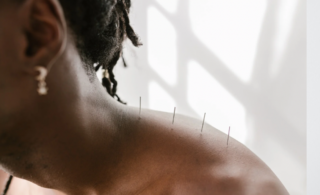
Acupuncture for breast cancer: book an appointment
Acupuncture appointments tailored specifically to those going through breast cancer, at Future Dreams House in London. Acupuncture can help ease the side effects of breast cancer treatment, particularly joint pain and menopausal symptoms.
Medication that can help your hot flushes and night sweats
Ask your GP if they can prescribe any of the following:
- the blood pressure pill clonidine, a vasodilator that helps relax and widen blood vessels in the heart.
- Another option is the epilepsy drug gabapentin.
- Selective serotine reuptake inhibitor (SSRIs) antidepressants
- The overactive bladder drug oxybutynin is also prescribed off label for hot flushes
- A newer drug called Veozah Fezolinetant, a neurokin3 antagonists which is licensed for use in the UK but not approved for prescription on the NHS by NICE yet, is available on private prescription for between £45 and £95 a month through private pharmacies. ‘These are specifically for hot flushes, but there isn’t enough evidence to recommend them for women with breast cancer yet,’ says Dr O’Riordan.’ They do also require liver function monitoring.’
Read more about non hormonal drugs treatments in the British Menopause Society Consensus Statement.
What herbal remedies are safe?
Many women search for herbal remedies to relieve their menopause symptoms, but some aren’t safe for breast cancer patients, or can stop other drugs working, so you need to take a cautious approach.
Red clover has oestrogen–like properties and is not recommended for women with breast cancer and the herbal remedy black cohosh can interfere with the way tamoxifen is broken down by the liver. Soya supplements are also not recommended and should be avoided.
‘Turmeric, red bush tea and St John’s Wort all interact with tamoxifen and stop it working, ‘says Dr O’Riordan.
‘Always check with your doctor before taking any herbal remedies to see if they are safe and not contraindicated for any medication you are taking, but ultimately it will be your responsibility to find out as the reality is that your doctor may not have the time to research them for you,’ says Dr O’Riordan.
Check out the safety of herbal remedies and possible drug interactions on the Memorial Sloan Kettering Cancer Centre website here.
Tips on coping with insomnia
It’s not surprising that you’re having sleepless nights with all you’ve got going on – worrying about your breast cancer, and then menopause symptoms such as night sweats, joint pain, heart palpitations and anxiety on top.
Lifestyle measures that can help with sleep problems
- Good sleep hygiene – making sure your bedroom is cool, quiet, and dark, you have a regular bedtime and winding down routine. Wear ear plugs if you have noisy neighbours, or your partner snores, invest in a black out blind to block out streetlights and turn off blue light devices. Try and relax for an hour before bed by taking a warm bath or reading a book.
- Tackle negative thoughts connected to how you view sleep with CBT-I a talking therapy specifically for insomnia.
- Listen to a meditation tape or sound bath recording to help you relax and wind down, easing stress and anxiety. We run regular relaxation events at Future Dreams.
Medication for insomnia
GPs don’t prescribe sleeping tablets often these days and then only for short term relief. These include ‘Z’ drugs such as zopiclone, but only as a stop gap.
‘The hormone supplement melatonin gives your body more of a hormone that regulates your sleep cycle and is safe for women with breast cancer, but isn’t available on NHS prescription, you have to buy it privately,’ says Dr O’Riordan.
What helps with joint pain?
Joint pain is common in menopausal women, affecting around 50 per cent of women according to some estimates. Common aches and pain sites include the hip, knee, shoulder, and hand joints.
Oestrogen has anti-inflammatory effects and supports joint and bone health and as levels of the hormone drop, joints can become stiffer, inflamed and more painful.
Letrozole, anastrozole and exemestane are associated with joint pain, as is tamoxifen.
‘Oestrogen is a natural lubricant for your joints but when you are taking aromatase inhibitors, you don’t make any oestrogen, whereas women going through a natural menopause have a little, so your joint pain is usually worse than someone having a normal natural menopause,’ says Dr O’ Riordan .
‘What really helps with joint pain is exercise – if you are walking every day, you are keeping your joints supple and mobile. If you don’t walk because it’s painful, they get stiff and the more you don’t walk the stiffer they get.
‘Lots of people swear by glucosamine and chondroitin supplements and cod liver oil, both are completely safe to take if that’s what you want, but it’s walking – and it can be gentle and slow walking – that will do the most good.’
Painkillers such as paracetamol and ibuprofen can help with joint pain, but if they don’t give relief you can ask for a referral to a pain management service for specialist advice.
‘Switching to tamoxifen from an aromatase inhibitor, a different breast cancer drug may help as it causes less joint pain, so talk to your doctor about this,’ says Dr O’ Riordan.
Loss of sex drive and intimacy
Lack of oestrogen and testosterone hormones can affect your sex drive in menopause and causes issues such as vaginal dryness and pain during sex.
You may also have body image issues due to your breast cancer surgery or weight gain due to menopause.
‘I’ve had a lot of women with breast cancer tell me they want their husbands to leave them and I asked my own husband to divorce me and find a woman with two breasts and a libido that matched because of the guilt I felt breast cancer had done to our marriage,’ says Dr O’Riordan.
‘Tackling this starts with communicating with your partner, explaining why things are different, so they understand it’s not that you don’t fancy them anymore it’s that your body doesn’t work the way it used to.
‘It’s helping your partner understand that it’s not anyone’s fault you’re not going to get wet spontaneously, it’s because oestrogen is a lubricant and you don’t have it anymore. You can still find someone attractive, but you may not respond physically or actually feel the urge to have sex.’
Dr O’Riordan says for some couples it can be enough just to sit next to each other and hold hands and show affection just to regain the dating foreplay and rediscover intimacy.
What can help your sex life in menopause?
- Lubricants and vaginal moisturisers: ‘These are great, and I think everyone should be told to use them, there are two lubricants I recommend – Yes and Sutil, which have no added chemicals, as a lot of lubricants have glycerin as an ingredient which can cause thrush,’ says Dr O’Riordan.
- Masturbation: ‘This can be a good way to achieve orgasm and remind you that orgasm and sex can be pleasurable. Try using vaginal dilators and mini vibrators. They will help stretch the vagina as it’s a muscular tube and will shrink if it doesn’t get used regularly. This is something you can do with your partner, but it may not be spontaneous.’
- Have sex: ‘The more you have sex the easier it becomes,’ says Dr Riordan. Regular sex improves blood supply and helps stretch vaginal tissue.
You can read more about the effects of breast cancer treatments on sexual health in this article on the Breast Cancer Now site.
Can I be prescribed vaginal oestrogen?
‘The answer is yes,’ says Dr Riordan. ‘There is a lot of data and research and trials that have shown that vaginal oestrogen does not increase the risk of breast cancer recurrence, even if you are taking aromatase inhibitor drugs. This is because the amount that enters the bloodstream is absolutely tiny.’
‘If given early enough after menopause symptoms start, vaginal oestrogen can have a huge impact on a woman’s quality of life. The problem is the leaflet inside the box reads like it’s from the 1980s and says don’t give for breast cancer, so a lot of doctors, including oncologists and GPs are reluctant to give it still.
‘Doctors aren’t always aware of the latest trial evidence, so it’s worth taking the latest research evidence along with you and saying you want them to prescribe it to ease your symptoms and improve your quality of life.’
A 2025 review of evidence published in the Journal of Post Reproductive Health, concluded there was no evidence from studies that vaginal oestrogen can cause breast cancer recurrence. The reviewers supported the view that vaginal oestrogen can be used as a 2nd line treatment when lubricants and vaginal moisturisers haven’t worked.’
Vaginal oestrogen can help with symptoms of urogenital atrophy (UGA) where lack of oestrogen results in a thinner lining of the vaginal lining and skin. UGA symptoms can include vaginal itching, burning and pain on sex, as well as increased urinary frequency and pain passing urine. These symptoms can develop years after the menopause and can be mistaken for signs of ageing, a urinary tract infection or an overactive bladder.
NICE Menopause Guidelines also recommend vaginal oestrogen for women with a history of breast cancer who have genitourinary symptoms that have not responded to non-hormonal treatments, and they can be used in combination with vaginal moisturisers and lubricants.
Depression, anxiety and brain fog
The menopause can be a tough time psychologically as well as physically, even harder when you are dealing with breast cancer as well, with symptoms ranging from low mood and brain fog to anxiety and depression.
Listen to our Future Dreams Podcast on mental health in breast cancer.
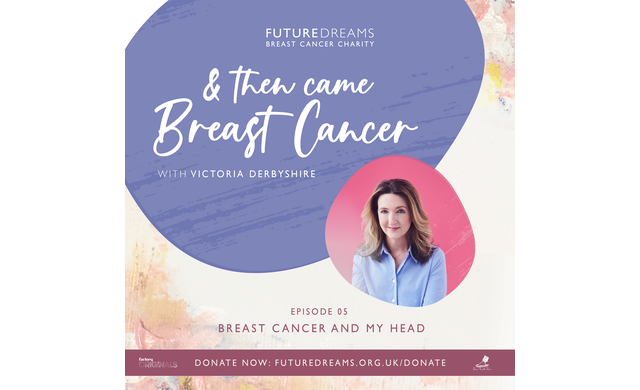
Breast cancer and my head – Episode 05 – Future Dreams
What does having breast cancer mean for your mental health? In this episode, Victoria Derbyshire is with three women- Shevelle, Carly and Saskia who speak frankly about the personal and psychological challenges that followed their diagnosis.
The NICE Menopause Guidelines set out a range of lifestyle changes you can make to help support your mood including regular physical activity, eating a healthy diet and good sleep hygiene (see above), as well as the talking therapy Cognitive Behavioural Therapy.
Selective Serotonin Reuptake Inhibitors (SSRIs) antidepressants such as citalopram and escitalopram can be prescribed for depression in menopause in women with breast cancer, see your GP to discuss how you are feeling.
‘It can be difficult to differentiate between brain fog / chemo brain from the effects of the menopause, but you can get cognitive symptoms when you are going through chemotherapy or afterwards and hormone treatments such as tamoxifen can have similar effects,’ says Dr O’Riordan.
‘Keeping a diary and using memory aids such as alarms and phone apps can help, as can prioritising sleep and reducing stress.’
Macmillan the cancer support charity recommends memory exercises to help train your brain and improve memory and concentration, as well as taking regular breaks and concentrating on doing one thing at a time.
If you are struggling with concentration at work, speak to your employer to see if any adjustments can be made to your workload.
Weight gain and Meno belly
Going through menopause can cause weight gain especially around your middle, as when oestrogen levels drop, visceral fat around your organs increases from 5 to 8 per cent of total body weight to 10 to 15 per cent of total body weight. At the same time your metabolic rate at which you burn calories and the amount of lean muscle you have decreases.
On top of this, some hormone treatments such as tamoxifen and aromatase inhibitors can cause weight gain as a side effect.
The British Menopause Society recommends keeping a food diary as a first step if you are trying to work out why you have gained weight to identify any bad habits such as grazing and unconscious eating, or eating big portions, and then moving on to make 2 or 3 diet changes a week, as well as increasing physical activity.
The BMS advise eating structured meals made up of one quarter protein, one quarter carbohydrate and half fruit and vegetables, increasing fruit and vegetable intake and cutting back on sugar, salt and fat. They stress carbohydrates are essential for midlife women but suggest choosing those with a low glycaemic index (meaning they break down at a slower speed keeping you fuller for longer), such as multigrain, rye and seeded bread, potatoes, and pasta cooked al dente.
Activity wise, the BMS recommends aiming for 150 minutes of exercise a week and aiming for 10,000 steps a day (5,000 or 7,500 if you are starting from a low level of activity) and incorporating exercises to increase muscle mass and metabolic rate.
Get your trainers on: How to exercise during cancer treatment.
Are soya foods safe to eat?
Dr Riordan says it’s fine to eat foods containing phytoestrogens, found in foods containing soya such as tofu, tempeh, edamame, miso and soya milk as the plant oestrogens are much weaker. The American Cancer Society says the health benefits of soya-based foods outweigh any risks.
However, soya supplements are not recommended as they contain much higher amounts of plant oestrogens.

Read our Guide To Breast Cancer Menopause Part 1
’The menopause during or after breast cancer is different – it happens very fast as it is chemically or surgically induced and the symptoms can be more severe and intense, explains Dr Liz O’Riordan.
More on Menopause from cancer treatment – advice and support
Some breast cancer treatments can lead to early menopause, or menopausal symptoms. This expert advice and support is here to help answer your questions.

Breast cancer support: book classes, therapies and workshops
If you, or a loved one, have been diagnosed with breast cancer, Future Dreams can offer support In-person or online, wherever you are in the UK. We have a wide variety of group and individual support at any stage of a breast cancer diagnosis.
About the author
Dr Liz O’Riordan – a distinguished speaker, author, and former consultant breast surgeon who has transformed personal adversity into a powerful platform for education and inspiration. Diagnosed with breast cancer three times, Liz offers a unique perspective that bridges the gap between medical expertise and patient experience. Throughout her career, Liz has been recognised for her contributions to breast cancer awareness and patient care. She was awarded the Humanitarian Award from Future Dreams Charity in 2024 for her advocacy work.
Further advice
Future Dreams hold a range of support groups, classes, workshops and events to help you and your carers during your breast cancer diagnosis. These are held both online and in person at the London-based Future Dreams House. To see what’s on offer and to book your place, see here.
To return to the homepage of our Information Hub, click here where you can access more helpful information, practical advice, personal stories and more.
Reviewed January 2026
The information and content provided in all guest articles is intended for information and educational purposes only and is not intended to substitute for professional medical advice. It is important that all personalised care decisions should be made by your medical team. Please contact your medical team for advice on anything covered in this article and/or in relation to your personal situation. Please note that unless otherwise stated, Future Dreams has no affiliation to the guest author of this article and he/she/they have not been paid to write this article. There may be alternative options/products/information available which we encourage you to research when making decisions about treatment and support. The content of this article was created by Dr Hannah Short and we accept no responsibility for the accuracy or otherwise of the contents of this article.
Share

SUPPORT RESEARCH EDUCATION
Donate to those touched by breast cancer
Sylvie and Danielle began Future Dreams with just £100 in 2008. They believed nobody should face breast cancer alone. Their legacy lives on in Future Dreams. We couldn’t continue to fund support services for those touched by breast cancer, raise awareness of breast cancer and promote early diagnosis and advance research into secondary breast cancer without your help. Please consider partnering with us or making a donation.