


Architect Katy Marks, 46, was diagnosed with breast cancer in 2017 at the age of 39. She is married to Chris, 50, also an architect, and lives in London with their two teenage boys.
Here she tells the story behind the Unobra
‘My surgeon gave me what felt like a stark choice: “You’re young, so you can have a reconstruction, look good and feel feminine… OR… have a simple mastectomy, flat closure, lower risk, but obviously won’t look as good.”
I thought to myself “I’ll decide what makes me feminine! Why can’t I have the simplest, safest surgery option AND feel good about my body?”
After having chemotherapy, surgery and radiotherapy, I couldn’t face the idea of any more surgery.
I was trying to get rid of multiple tumours in my body and my overriding feeling was that I didn’t want a foreign object such as an implant put back into my body. I didn’t have enough spare flesh for a DIEP (a Deep Inferior Epigastric Perforator) flap, a breast reconstruction method that uses skin and fat from the lower abdomen. I would also have had to have a breast reduction on my FF cup remaining breast to match an implant because the skin on my surgery side, just couldn’t stretch to that size.
Life with one breast
I woke up after surgery to find that the surgeon had put me in a “boulder holder” bra stuffed with cotton wool. It felt bizarre and traumatic.
I began to wear a bra with a prosthesis in it, but I felt constantly self-conscious. The prosthetic would ride up my body and look uneven, and I started to resent the fact that I was being made to feel embarrassed and ashamed of what had happened to me.
I decided that I had to learn to like my body .
A normal mastectomy bra is primarily designed around making a woman look ‘normal’ i.e. with two breasts.
I realised that my body needed something different. Mastectomy bras were either incredibly soft and comfortable but gave zero support to my remaining breast. Or they were tight and uncomfortable. I had a lot of swelling after surgery and it was clear that I needed gentle, even compression over the scar tissue rather than tight underband elastic and an uncomfortable prosthetic.
Tipping point
The tipping point for me came when I was teaching some students and looked down to see the prothesis had ridden up somewhere near my shoulder. I was extremely lopsided and mortified and dashed to the loo. I looked at myself in the mirror and realised that I couldn’t carry on hiding my body and feeling constantly self-conscious. I chucked the prothesis in the bin and went back to the seminar with one boob. Those students must have thought I looked quite bizarre, but I thought I’m not going to wear this anymore.
Up until that point I’d thought I had to wear a prosthesis if I was going out. I couldn’t be bothered to wear it home with my family. Then after a while I thought well I’m not bothering to wear it if my best friend comes round and then gradually that extended to feeling that I couldn’t be bothered to wear it whilst popping out to the corner shop for some milk.After a while, I asked myself: “ who am I actually wearing this for?”That’s when I realised I didn’t need to wear it at all.
I’ve got two boys and I don’t want them growing up seeing their mum embarrassed by her body. Why should I be embarrassed about having had cancer? They need to understand what it looks like. I had to teach myself to find beauty in my body, and I knew that I couldn’t do that if I was constantly hiding it and acting like it was something to be ashamed of.
How I designed my own bra
When I tried on clothes, they felt awkward, but I realised this was not the fault of my body, but simply that they were not designed for my asymmetric shape.
That’s when I had a lightbulb moment and decided to design a bra for women with one breast. I did some research and realised that there are hundreds and thousands of women in the UK alone, who have had mastectomies and 70 per cent of them don’t have immediate reconstruction and yet I had not seen a single image or seen a woman out in public who was openly asymmetric with one breast.
I started doctoring my bras chopping them in half and sewing on a strap to go around my body.
My husband Chris could see how frustrated I was and bought me a voucher to have a bespoke bra made. I took the bra maker loads of sketches and my clumsy homemade efforts, and she made me some beautiful bras, but they were expensive so it wasn’t a long-term solution. I instinctively felt that there would be other women who would appreciate a one cup bra – giving support for the remaining breast and incredible comfort and softness over the scar.
I went back to the design drawing board and tried to create something more affordable that I could make at scale.
The design process took a long time. A bra is a piece of engineering anyway, but even more so when you design an asymmetric bra where you have this sort of natural twist, because the weight of the breast is on one side and you also need to factor in scar tissue and comfort. It was incredibly complicated. We tested them on women of all sizes –modifying things over and over again to improve the design.
I worked with pattern cutters, a lingerie designer and incredible makers who have worked with me to perfect the fit.
I hope that when women look at our lingerie and swimwear, they almost do a double take and think, oh wow!…before realising we have one breast. I want it to look deliberate, elegant and confident.
The Unobra website now sells black and white bras for £60, as well as bikinis and swimsuits and has sold several thousand. New products in the pipeline include a soft cup sports bra, vest tops and more colours. Many breast cancer care teams around the country now tell patients about the Unobra and they are also available through the Future Dreams bra lounge.
Visibility for asymmetric women
I’m not just selling a product, I’m also selling an idea: it’s okay to look like this. It’s important that partners, families and society in general get used to seeing images of openly asymmetric women because there are SO many of us.
I hope women are wearing our bras and swimwear and not only feeling it fits well, but also actually looking at themselves in the mirror, thinking, “Yeah, I look good,” and feeling a newfound confidence which is really special.’ www.unobra.co.uk
Further information
Future Dreams hold a range of support groups, classes, workshops and events to help you and your carers during your breast cancer diagnosis. These are held both online and in person at the London-based Future Dreams House. To see what’s on offer and to book your place, see here.
To return to the homepage of our Information Hub, click here where you can access more helpful information, practical advice, personal stories and more.
The information and content provided in all guest articles is intended for information and educational purposes only and is not intended to substitute for professional medical advice. It is important that all personalised care decisions should be made by your medical team. Please contact your medical team for advice on anything covered in this article and/or in relation to your personal situation. Please note that unless otherwise stated, Future Dreams has no affiliation to the guest author of this article and he/she/they have not been paid to write this article. There may be alternative options/products/information available which we encourage you to research when making decisions about treatment and support. The content of this article was created by Dr Tasha Gandamihardja, an oncoplastic breast surgeon and podcaster and we accept no responsibility for the accuracy or otherwise of the contents of this article.
Share
SUPPORT RESEARCH EDUCATION
Donate to those touched by breast cancer
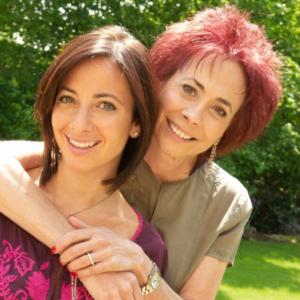
Sylvie and Danielle began Future Dreams with just £100 in 2008. They believed nobody should face breast cancer alone. Their legacy lives on in Future Dreams. We couldn’t continue to fund support services for those touched by breast cancer, raise awareness of breast cancer and promote early diagnosis and advance research into secondary breast cancer without your help. Please consider partnering with us or making a donation.