


TRIGGER WARNING This article contains information about secondary breast cancer
Dr Liz O’Riordan, a former breast cancer surgeon who has had breast cancer three times and author of The Cancer Roadmap, guides you through the treatment options when you’ve been diagnosed with secondary breast cancer.

Breast cancer returning as secondary cancers in other parts of the body isn’t the news anyone chooses to get obviously, but there are still lots of treatment options available that can prolong your life.
An estimated 61,000 people in the UK are living with secondary breast cancer in the UK, many of them for many years – 15 to 20 years plus in some cases, although average survival is more like 5 to 7 years.
Why there’s always room for hope
Dr O’Riordan says: ‘Ten years ago average life expectancy with secondary breast cancer used to be about three years, but now it’s more like five, six, or even seven years – it’s improving all the time.
‘If one type of treatment stops working, you can move onto the next one, or a different combination, and there are new drug treatments coming through all the time.’
Dr Riordan says the general public’s perception of secondary breast cancer is lagging behind the reality – where thousands of people are living active and fulfilling lives, sometimes for many years, despite their terminal diagnosis.
‘What you see in the media and films is those awful pictures of people dying in hospices in the last days of their life, but not the images of people running marathons, seeing their kids graduate, or meeting their grandchildren, say Dr O’Riordan.
‘My message is that it’s not the end of the world until it is the end of the world, and it’s possible to live a very full, active, and fulfilling life based around your treatment and side effects. I think we do need more awareness of this, and there are several charities trying to do that and show you that secondary breast cancer isn’t what you think it is.
‘There are half a million people with metastatic cancer estimated to be living the UK, living and working and doing crazy things like running the New York Marathon. Every single person that you meet walking down the street could have metastatic breast cancer – we just don’t look like you think we would.’
How secondary breast cancer treatment is improving
Advances in treatments include new drugs, targeted combination therapies, plus precision radiotherapy.
More new drugs and more drugs used in combination
Since 2017, more than 20 new drugs for breast cancer have been approved, with seven approved in 2022 alone.
Combinations of different treatments have also been approved by NICE. In early 2025, Olaparib (Lynparza) was approved for treating BRCA mutation positive HER-2 negative secondary breast cancer after chemotherapy in England, following approval in Scotland. In May 2025, NICE approved capivastertib with fulverstrant for treating hormone positive HER-2 negative advanced breast cancer after endocrine (hormone) treatments.
However, the drug Enhertu was rejected for funding by NICE, despite evidence of its effectiveness as the drug watchdog said it didn’t offer taxpayers value for money.
You can read more about the pipeline of new drugs and approvals at Breast Cancer Now.
‘There is no way of predicting how long people with secondary breast cancer will survive. But treatments today are much more targeted and if one type of treatment stops working you can move onto the next one, or a different combination of drugs, and there are new treatments coming through all the time’ says Dr O’Riordan.
Other advances in treatments
There have also been important advances in radiotherapy techniques. We now have more targeted forms of radiotherapy that can be used to treat bone pain for instance, or the Gamma Knife/Cyber Knife that can deliver precise radiotherapy doses to specific regions of the brain rather than expose the whole brain to it,’ explains Dr O’Riordan.
‘There are also probes that can be inserted into the liver to microwave/ablate cancerous lesions – we are getting much better overall at cherry picking small lesions with targeted treatments to destroy them.
‘Thanks to these advances people can live a long time with secondary breast cancer these days – but sadly that’s not the case for everyone and some women and men will die quite quickly because they have a particularly aggressive type of cancer that doesn’t respond to treatments.’
What are the treatments for secondary breast cancer?
First line treatment for secondary breast cancer will depend on what type of breast cancer you have, what stage it is, and whether it is hormone sensitive or not.
The range of treatments include hormone therapy, chemotherapy, radiotherapy, targeted treatments and immunotherapy, plus drugs to strengthen your bones and medication to relieve side effects, and surgery to relieve symptoms.
‘Some people might have surgery to remove the metastatic deposits to give them a better chance of survival, but generally it is drugs and/or chemotherapy depending on what type of breast cancer you have and where the cancer is,’ says Dr O’Riordan.
‘You may have heard of first line, second line, and third line treatment. What we do based on all the trials and data is start you on the treatment we think is going to have the best effect.
‘You might have started on chemo drug A and targeted treatment B, and you will be monitored closely. Then at some point in time, one of three things will start to happen. One is that the tumour starts to shrink and shrink and shrink until there’s nothing left and we can’t see it. That’s when we say you have no evidence of disease, and you stay on that treatment.
‘The next thing that could happen is that the tumour starts to shrink a bit but then it starts to grow again. When the tumour starts to grow, or that treatment isn’t working, you move onto the second line of treatment because the cancer has got resistant to the drugs. If the new combination of treatments stops working, you can move onto the third line.
‘Some types of cancer may even have 4th or 5th lines of treatment, but some may have only one or two, depending on the cancer type and where the cancers are.’
Targeted treatments
Dr O’Riordan says scientists are developing targeted treatments that target individual cancer mutations.
‘We’re getting more and more specific. There is even talk of a vaccine to cure HER2 + metastatic cancer and some people are living as long as 15 or even 20 years with metastatic disease.
‘Living for 10 or 15 years with metastatic cancer is common these days, but obviously not everyone will.’
Finding a clinical trial
If you’ve been diagnosed with metastatic breast cancer, it’s always worth looking to see which trials you might be eligible for as soon as possible after your diagnosis, advises Dr O’Riordan.
‘Most small hospitals can’t do a lot of trials because of the time and money it takes to organise them, so if you don’t live in Manchester, London or Edinburgh or other big cities where the trials tend to be based, you may have to travel for treatment if you want to take part.’
Check out the registry of clinical trials run by the charity Make 2nds Count.
Where to get emotional support
We know from feedback from Future Dreams users that a secondary breast cancer diagnosis can feel very shocking and isolating, both for you, and your friends and family. Some say they don’t feel seen and getting the specific support they need is hard to come by.
‘It can be very hard having this discussion with your partner and/or children, and that’s where counsellors can help you get through that,’ says Dr O’Riordan.
‘Your diagnosis and treatment can completely disrupt your life, and you can’t plan or prepare for it. Your life is now going to be in three monthly cycles, living from scan to scan. It’s just a new way of living.’
You may want to consider getting some professional support from a psychologist or counsellor to help you deal with your feelings and help you cope.
• In England you can self-refer for talking therapies such as cognitive behavioural therapy (CBT) and psychotherapy, if you are experiencing anxiety or depression.
• In Wales you need a GP referral for talking therapies
• In Scotland you can calls Living Life Services on 0800 328 9655
• In Northern Ireland the number is (0808) 808 8000
You can also search for a counsellor in your area on the British Association for Counselling and Psychotherapy website.
Future Dreams offers a range of specialist support services and hosts meetings for secondary breast cancer support groups.
The following groups can offer peer support via social media networks and in person
• Secondary Sisters on Instagram, who also hold in person meetings at Future Dreams House
• METUPUK is a metastatic breast cancer patient advocacy group in the UK.
Share




SUPPORT RESEARCH EDUCATION
Donate to those touched by breast cancer
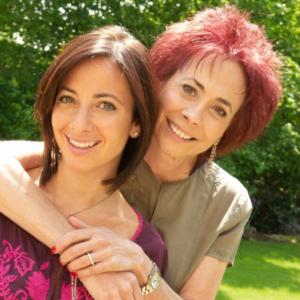
Sylvie and Danielle began Future Dreams with just £100 in 2008. They believed nobody should face breast cancer alone. Their legacy lives on in Future Dreams. We couldn’t continue to fund support services for those touched by breast cancer, raise awareness of breast cancer and promote early diagnosis and advance research into secondary breast cancer without your help. Please consider partnering with us or making a donation.