

By Jo McNamara and Naman Julka-Anderson
Radiotherapy is one of the treatments that can be given to people with breast cancer-therapeutic radiographers Jo McNamara and Naman Julka-Anderson from Rad Chat give their answers to your questions about what to expect and advice to make radiotherapy treatment as comfortable as possible for you.
What is radiotherapy?
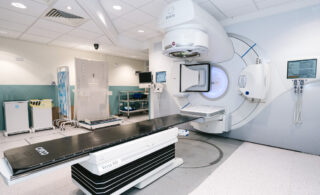
Radiotherapy uses targeted beams of radiation, usually X-rays, to treat cancer. It can be given to try to cure the cancer, lower the chances of it returning after other treatments, or help ease symptoms for people living with metastatic disease.
Most types of radiotherapy use photons (X-rays); however, you may have electrons delivered as a boost to your scar areas.
Does radiotherapy hurt?
No, the radiotherapy itself is painless, and you are unlikely to feel the radiation itself, and nothing stays in your body afterwards.
You may have side effects from treatment that cause pain, you will be given advice and support to help manage any side effects that you may develop.
How long does radiotherapy take?
The treatment itself takes about 5 minutes, but the set-up, positioning and imaging may take longer. Please allow 10-15 minutes for the actual treatment.

How does radiotherapy work?
When radiation passes through the body, it creates tiny chemical changes inside cells. These changes break the DNA strands that cells need in order to grow and repair themselves.
Cancer cells are usually fast growing and not very good at repairing DNA damage. So, when their DNA is broken by radiotherapy, they become weaker, stop dividing, and eventually die off.
Healthy cells, on the other hand, repair damage much more effectively. This means they can recover between treatments, especially when radiotherapy is given in small daily doses. This difference in repair ability is what allows radiotherapy to target cancer cells while keeping normal tissues as safe as possible.
Will I be exposed during my radiotherapy?
During breast radiotherapy, your breast, or chest wall will be exposed to the air, but only as much as is necessary for the team to treat you safely and accurately. This is completely routine and something the radiotherapy team does every day with great care and professionalism.
Most patients are positioned so that only the treatment area is uncovered, and the rest of your body is kept covered. The team will explain what they are doing at each step, and they will make sure you feel as comfortable and supported as possible.
Therapeutic radiographers are trained to protect your dignity at all times, and they work quickly and respectfully so the exposure is kept to a minimum. Once you are in position, they step out of the room only while the machine is on, and they monitor you closely on cameras, so you are never unsafe, or unattended.
It is completely normal to feel unsure about this beforehand, but most people find the experience far less exposing than they expected. If you have worries, you can always talk to the team so they can adjust things to help you feel more at ease.
Will male therapeutic radiographers be treating me?
Male therapeutic radiographers may be part of the team, but your comfort and dignity are always the priority. Radiotherapy departments are made up of both male and female staff, and whoever is caring for you will be fully trained, professional and focused on keeping you safe and supported.
If you feel uncomfortable with male staff being present during positioning or treatment, you can tell the team. They will do their best to accommodate your preferences whenever possible, such as arranging for female staff to carry out the more intimate parts of the setup.
Many patients find that once treatment starts, the process feels very routine and respectful, and any worries ease quickly. The most important thing is that you feel comfortable, so please do share any concerns with your radiotherapy team. They are there to help.

I have been asked to attend a pre-treatment appointment, what is that?
The pre-treatment appointment is essentially a CT scan; these images are then used to plan your radiotherapy treatment.
When you arrive, the therapeutic radiographers will talk you through the process and check your details. You will then be helped onto the CT scanner couch and gently positioned in the same way you will be for your radiotherapy treatments. This will involve raising your arm or arms, using supports and making small adjustments so you are comfortable and in the correct position. This will be the position you are in everyday for treatment so please do make sure that you are comfortable and know that you can maintain this position.
Once you are positioned, the team may place tiny temporary marks or stickers on your skin to help line things up. If permanent very small tattoo dots are needed for accuracy. They will explain this first and get your consent. Some departments do not use tattoos and use surface guided radiotherapy (explained in more detail below).
The CT scan itself is quick and painless. The machine is open at both ends and does not feel enclosed. You will not feel the scan happening; you just need to lie still for a short time while the machine takes images of the area to be treated. The team will leave the room briefly during the scan, but they can see and hear you at all times.
Once the scan is finished, the therapeutic radiographers will help you off the couch and let you know what happens next. The images from your scan are then used by a team of specialists to design a personalised radiotherapy plan tailored to your anatomy. This can take two weeks to complete and the reason why there is a delay between CT and starting your radiotherapy treatment.
The whole appointment usually takes around 20 to 40 minutes. If you have any worries, or need support during the scan, just let the team know. They are there to help you feel as comfortable as possible.
Why is the radiotherapy room so cold?
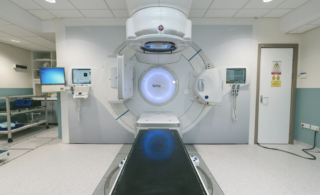
The CT scanners and the radiotherapy linear accelerators (Linac’s) generate a lot of heat when they are running, so the rooms need to be kept cool to protect the equipment and make sure everything works safely and accurately. The cooler temperature also helps keep the air dry, which reduces the risk of condensation inside the machines.
Maybe wear warm socks, a hat and gloves if you know you will get cold.
How can I prepare for radiotherapy?
Before radiotherapy: start making healthy lifestyle choices as soon as you can.
This will enable you to be in the best possible shape ready for your treatment.
- If you smoke, seek support for smoking cessation ASAP. Your radiotherapy side effects (such as skin reactions) are likely to be more severe if you smoke through treatment1 2.
- Start to cut out alcohol where you can as it dehydrates you and can increase symptoms of fatigue3. There is support available for patients who depend on alcohol and need help to quit drinking, this will in turn improve your overall health, as well as lessen your side effects and reduce your risk of reoccurrence.
- Radiotherapy does cause a lot of cellular damage and so increasing your fluid intake will help with repair and growth. Most people should aim to drink enough during the day so their urine is a clear pale yellow colour, try to ditch the tea and coffee which are diuretics and will make you urinate more and can actually dehydrate you, try to switch to water instead. Maintaining hydration can also help with the symptoms of fatigue.
- Start to make positive changes to your diet, lots of fruit and vegetables, fibre and protein. This will help with cellular repair and also assist with fatigue4.
- Engage in physical activity. Walk to the local shop rather than drive, and go for a walk rather than watching the TV. Being out in fresh air and getting some exercise is beneficial for your physical and mental health and can also boost your energy5. It’s important to only engage in physical activity that suits your capabilities.
Helpful resources include:
- Help for Smoking cessation
- Local smoking cessation
- Alcohol support
- Increasing your physical activity with peer support
Is mental health support for radiotherapy available?
It’s important to acknowledge what you’re going through is difficult, both emotionally and physically. Your oncology team will help you find a new normal. Radiotherapy, even when being used to cure your cancer, can leave you with lasting consequences. This will vary between people, but be aware that radiation can cause late effects further down the line. Late effects can arise from 6 months to 20+ years post-treatment. Starting to process this and adapt physically to your new body can be challenging and be open to accessing support and advice for your mental well-being.
Helpful resources are:
Will I have to lift my arms for radiotherapy – what exercises will help?
After having surgery it is often the case that arm mobility is affected.
In radiotherapy we need patients who are having breast or chest wall radiotherapy to raise their arms above their heads for several minutes a day. Make sure you follow the physiotherapy exercises recommended by your team religiously after surgery to ensure you can comfortably complete your radiotherapy course.
Also consider doing simple exercises around the house to improve your mobility, for example reaching to put cans on a high shelf. This will also help you maintain your mobility after you’ve finished your treatment6.

Some mobility exercises to do post-surgery:
- Breast Cancer Now
- Get me Back PT trainer
- Vicky Fox Yoga
- Rad Chat social media videos with Kat Tunnicliffe
How can Future Dreams help me through this?
Future Dreams offer a range of workshops to support you before and after treatment, including Look Good Feel Better, and Style and Confidence workshops both in person and online as well as sessions on Sex and Intimacy after breast cancer. Check them out.
About the author
Jo McNamara and Naman Julka-Anderson are the hosts of Rad Chat – an oncology focused podcast for both patients and professionals. They are both Therapeutic Radiographers; Jo is an academic involved in the training and education of healthcare professionals in oncology, and Naman works as a Macmillan Treatment Review Radiographer in the NHS. Together they have compiled their top tips for breast cancer patients having radiotherapy using their combined 25 years’ worth of experience. Rad Chat always advises patients to talk to their oncologist and therapeutic radiographers about their individual radiotherapy treatment.
References
- https://bjui-journals.onlinelibrary.wiley.com/doi/10.1111/bju.12969 ↩︎
- https://www.sciencedirect.com/science/article/abs/pii/S1877782118302388?via%3Dihub ↩︎
- https://www.sciencedirect.com/science/article/abs/pii/S1877782118302388?via%3Dihub ↩︎
- https://be.macmillan.org.uk/Downloads/beMacmillan%20PDFs/MAC13612_Healthyeating_E03_LOWRES_20200206_KA.pdf ↩︎
- https://www.macmillan.org.uk/documents/aboutus/health_professionals/physicalactivityevidencebasedguidance.pdf ↩︎
- https://www.bmj.com/content/375/bmj-2021-066542 ↩︎
Share

SUPPORT RESEARCH EDUCATION
Donate to those touched by breast cancer
Sylvie and Danielle began Future Dreams with just £100 in 2008. They believed nobody should face breast cancer alone. Their legacy lives on in Future Dreams. We couldn’t continue to fund support services for those touched by breast cancer, raise awareness of breast cancer and promote early diagnosis and advance research into secondary breast cancer without your help. Please consider partnering with us or making a donation.